Farmington Hills service guide · 04

Deck, porch & railing repair in Farmington Hills

Start with safe access, not a test of the rail.

Farmington Hills homes move through freeze-thaw cycles, spring snowmelt, humid summers and repeated wetting at roof edges. Ice dams can soak fascia and soffits, while standing water or snow load can expose weak points in decks, steps and rail connections. For Deck, Porch & Railing Repair in Farmington Hills, We look at soft board ends, loose rail connections, stair and post joints, peeling coatings and places where water collects beneath shade or debris. The repair follows Find → Open → Rebuild → Protect: trace the wetting, open connections safely, rebuild to sound material and protect the repaired assembly.

Call (248) 309-8533Talk to Christopher Nolin about deck, porch & railing repair in Farmington Hills.
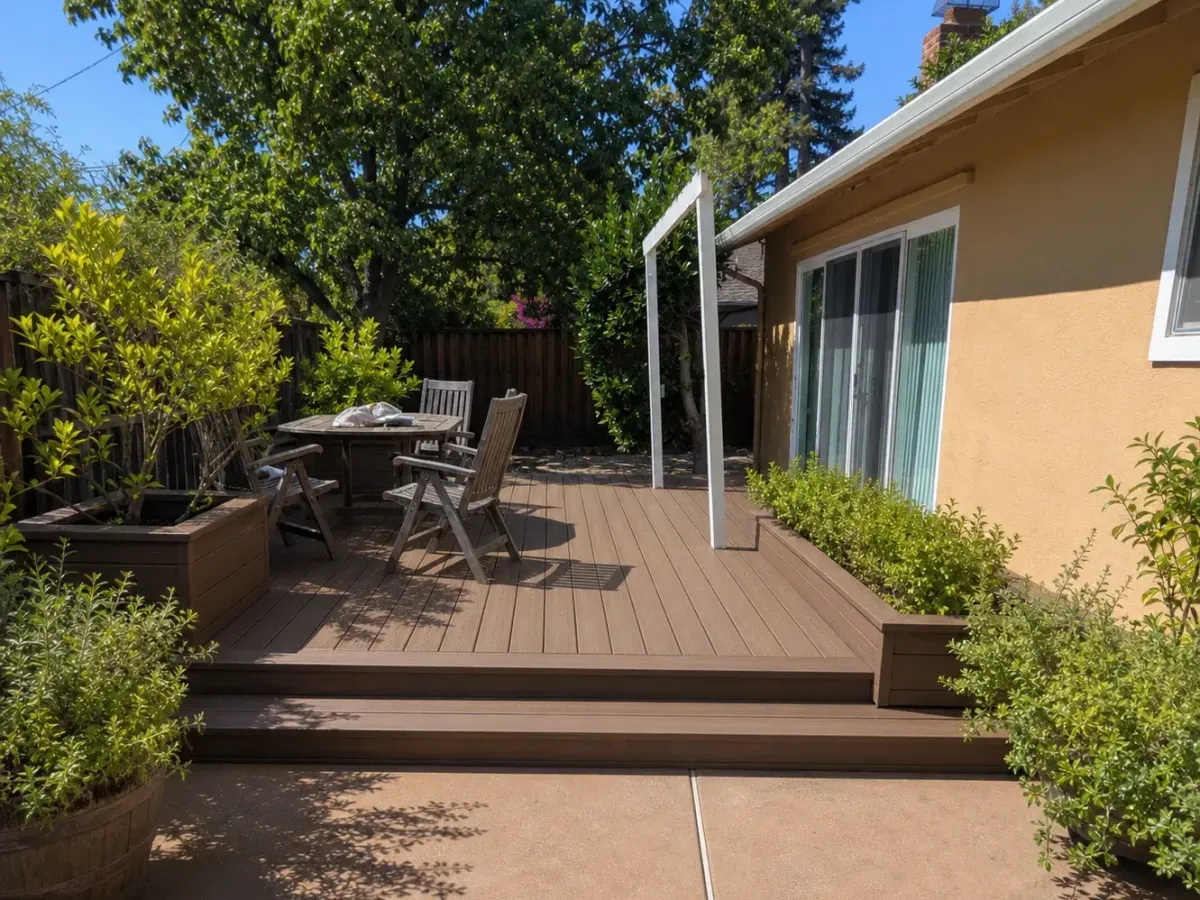
Composite backyard deck with steps beside a house; shared Steady Craftsman project example
Steady Craftsman portfolio exampleSteady Craftsman project example

When to take a closer look

Visible signs worth
a closer look.

You don’t have to diagnose the whole repair. Start with the signs you can see.

  • 01A rail, tread or post feels loose during normal use
  • 02Material splits or crumbles at a connection
  • 03A walking surface changes shape or feels soft

What a scope review can cover

  • Describe the assembly and where a change was noticed
  • Record safe access from ground level
  • Separate surface work from support and connection questions
  • Review materials, design and specialist needs

Photos & details to prepare

Use safe ground-level photos and note access restrictions. Identify the parts people should avoid and separate any supporting-component question from surface material preferences.

A note on safety & scope

Keep people away from suspect steps, rails and walking surfaces. Do not lean, climb or load-test them for a photograph. Structural work and applicable requirements need professional review before a scope can be accepted.

Sourced technical guidance

Farmington Hills territory decks: inspect the support system after winter, not just the surface

Snow can conceal board damage, cold conditions can limit inspection, and a thaw can reveal movement that a fresh finish will not correct. Decks, porches, stairs and guards each need their load paths and water exposure assessed. This guide is educational depth for the owner-confirmed operational eight-jurisdiction core. The site remains educational; it does not offer inspections or certify a structure for use.

Technical synthesis source set: Nws Michigan · Awc Decks · Nps Porches · Nps Moisture · Usda Biodeterioration · Usda Finishing · Epa Lead

Symptoms and observation

  • When an independently safe viewpoint is available, record changed stair alignment, visible post displacement, separated guard joints and staining around the house connection. Do not walk onto a snow-covered or suspect platform to obtain a closer image.
  • Note where meltwater or rain appears to collect at board ends, a landing or the base of a column. A slippery surface is an immediate access concern, but it does not identify the structural condition. Avoid scraping or removing coverings from uncertain flooring to see underneath.
  • Record connector corrosion and any movement already encountered during ordinary use without repeating it. Deicing exposure may be relevant where actually used; photographs cannot show internal metal loss, hidden joist decay or footing depth.

Synthesis references: Nws Michigan · Awc Decks · Nps Porches · Nps Moisture · Usda Biodeterioration · Usda Finishing · Epa Lead

When structure changes the scope

  • Assess support from deck boards through framing, posts and footings, along with attachment and lateral restraint at the house where present. Seasonal movement of shallow or unsuitable supports is possible, but the actual cause and correction require site-specific professional review.
  • Snow, drifting or a proposed heavy addition can introduce load questions beyond a generic deck repair guide. Guards and stairs also have independent attachment requirements. Do not add weight to test capacity, assume a deck survived winter safely, or use surface condition as project evidence adequate support.

Synthesis references: Nws Michigan · Awc Decks · Nps Porches · Nps Moisture · Usda Biodeterioration · Usda Finishing · Epa Lead

Materials and repair decisions

  • A repair plan should identify retained framing, renewed connections, drainage correction and any foundation work before selecting the final walking surface. Professional inspection after safe exposure may change a preliminary winter scope. Temporary support and dismantling need a controlled sequence.
  • Use treatment-appropriate wood and compatible fasteners, with details that avoid trapped water at post bases and the ledger. NPS porch guidance notes that deicing salts can promote fastener corrosion; where relevant, review the material and maintenance system rather than prescribing one universal chemical treatment.
  • Composite decking or a new railing still needs suitable backing, support spacing and product-compliant fastening. For painted older porches, retain sound fabric where appropriate and address possible lead paint before disturbance. Frost-related footing requirements must be confirmed locally, not copied as a statewide number.

Synthesis references: Nws Michigan · Awc Decks · Nps Porches · Nps Moisture · Usda Biodeterioration · Usda Finishing · Epa Lead

What drives an estimate

  • Separate a finish or board replacement from correction of footing movement, house attachment or deteriorated guard backing. The latter can involve design, safe temporary support and a substantially different work sequence.
  • Snow concealment, access below the structure, removal of failed materials and restoration around wall junctions affect assessment and construction. Reassessment after thaw should be identified where the initial view is incomplete.
  • Applicable permits, inspections, structural input, custom porch details and lead-safe controls are additional potential tasks. Neither deck size alone nor the arrival of warm weather establishes a complete repair price or date for safe reopening.

Synthesis references: Nws Michigan · Awc Decks · Nps Porches · Nps Moisture · Usda Biodeterioration · Usda Finishing · Epa Lead

Timing and exposure

  • Regional NWS normals support planning for winter snow and cold as well as precipitation during warmer months. A spring observation is useful, but water trapped beneath planters or at joints can remain relevant throughout the year. Winter is not the only moisture season.
  • Cold, frost and dampness can prevent proper curing even after snow disappears. Follow actual product conditions for permanent finishes and maintain restrictions until structural and review issues are resolved. Freeze-thaw distress and fungal decay should be assessed as distinct, potentially overlapping processes.

Synthesis references: Nws Michigan · Awc Decks · Nps Porches · Nps Moisture · Usda Biodeterioration · Usda Finishing · Epa Lead

Technical planning questions

Does surviving the winter prove a deck is safe?

No. Connections can be weakened or concealed damage can remain without an obvious collapse. Changed alignment, corrosion and water-related symptoms deserve assessment. Do not add people, furniture or other weight as a test of remaining capacity.

Why might a stair repair involve the footing?

If the supporting ground or footing has moved, replacing the tread alone may leave the geometry and support problem unresolved. The assessor should trace the changed position through the entire support system and determine the applicable local detail.

Is deicing damage only a surface-finish issue?

Not always. NPS guidance notes that deicing salts can contribute to corrosion of nails and other fasteners. Actual product use, exposure and connection condition need review. A clean or repainted surface cannot determine that the metalwork beneath is sound.

Can a standard deck plan specify the correct frost depth here?

Not by itself. The cited reference directs users to the authority having jurisdiction, and its prescriptive limits are not universal. Local requirements, site conditions and the actual structure must inform the footing design and any repair approval.

FAQ synthesis references: Nws Michigan · Awc Decks · Nps Porches · Nps Moisture · Usda Biodeterioration · Usda Finishing · Epa Lead

Sources and their limits

Source scope matters: a historic district does not describe every home, and regional exposure is not a property diagnosis. These references are links only.

  1. Wood Handbook, Chapter 14: Biodeterioration of Wood (2021)

    USDA Forest Service, Forest Products Laboratory · Preserved local evidence packet · accessed 2026-09-19

    Scope: Inspected previously retrieved primary PDF and extraction in qa/seo-depth/common/pdf/common-usda-biodeterioration; printed pages 14-1 to 14-8. General wood science, not a local damage survey.

    Evidence: Decay fungi require available moisture; dry rot is a misleading name for decay that may subsequently dry. Mold, chemical staining and decay are different phenomena. Early decay can reduce strength before conspicuous material loss. Heartwood durability varies, sapwood is less resistant, and repairs must address the moisture condition. Ground-contact exposure and structural consequences affect material treatment choices.

  2. Preservation Brief 39: Holding the Line—Controlling Unwanted Moisture in Historic Buildings

    National Park Service · Preserved local evidence packet · accessed 2026-09-19

    Scope: Inspected primary PDF already retrieved into common/pdf/common-nps-moisture; printed pages 1-7 and maintenance passages. Historic-building guidance; mechanism-level use, not a diagnosis or current municipal code.

    Evidence: Document moisture patterns and investigate sources before treatment. Roof runoff, failed gutters and flashing, irrigation, ground moisture, plumbing and condensation can wet materials; water can travel away from its entry point. Trapped moisture and indiscriminate impermeable coatings can worsen damage. Ice and freeze-thaw can physically damage materials; that mechanism is distinct from fungal decay.

  3. Preservation Brief 45: Preserving Historic Wooden Porches (2006)

    National Park Service · Direct source checked · accessed 2026-09-19

    Scope: Downloaded and parsed primary PDF in research/territory-services/pdf/ts-nps-porches; especially printed pages 5-11 and structural/code discussion. Preservation methods require property-specific assessment.

    Evidence: Porch floors, bases, columns, roof drainage and foundations interact. Pots, mats and vegetation can retain moisture. Loose rails can reflect failed fasteners, split wood or decay; a floor finish cannot determine structural adequacy. Skilled localized wood inserts and selected epoxy repairs can retain fabric, but supporting members need structural assessment and safe temporary support. Shallow supports may move with frost or soil moisture. Deicing salt can corrode fasteners.

  4. Wood Handbook, Chapter 16: Finishing Wood (2021)

    USDA Forest Service, Forest Products Laboratory · Direct source checked · accessed 2026-09-19

    Scope: Directly downloaded primary PDF; inspected printed pages 16-1 to 16-12 and application/failure passages. General finish and moisture science; no product-specific warranty or service-life prediction.

    Evidence: Sunlight degrades exposed wood surfaces and coatings; moisture changes drive swelling, shrinkage, checking and cupping. These processes are not themselves a diagnosis of rot. End grain readily absorbs water. Painting wet or degraded wood invites failure. Finishes slow moisture movement but do not replace drainage. Wood species, existing coating, surface preparation and application conditions affect finish selection and performance.

  5. Renovation, Repair and Painting Program: Consumers

    United States Environmental Protection Agency · Direct source checked · accessed 2026-09-19

    Scope: Primary consumer guidance fetched September 19, 2026; pre-1978 housing and paint-disturbing renovation. cannot determine any property's paint content or any provider's certification.

    Evidence: Homes built before 1978 are more likely to contain lead-based paint. Sanding, cutting and other paint-disturbing renovation can release hazardous dust and chips. EPA recommends hiring a lead-safe certified contractor trained in lead-safe work practices for such projects.

  6. DCA 6: Prescriptive Residential Wood Deck Construction Guide, 2015 IRC basis, 2018 revision

    American Wood Council · Direct source checked · accessed 2026-09-19

    Scope: Official primary technical guide downloaded via awc.org redirect. Inspected limitations, corrosion, footing, ledger and guard sections. Illustrates structural principles; NOT represented as the code adopted by any of the seven jurisdictions in 2026. Fence applications are explicitly general connection reasoning, not DCA 6 fence design.

    Evidence: Deck safety depends on verified supporting members, footing conditions, ledger attachment, lateral connections, guards and stairs, not just deck boards. Fastener/connector corrosion resistance and compatibility with treated wood matter; salt-water exposure warrants special attention. Local authority determines applicable footing/frost requirements. Unsupported house attachments and concentrated loads require a suitable design beyond simplistic surface repair.

  7. Southeast Michigan Climate Information: 1991–2020 Monthly Normals

    NOAA National Weather Service, Detroit/Pontiac · Direct source checked · accessed 2026-09-19

    Scope: Primary table fetched directly; page says updated May 2021 using NCEI 1991–2020 normals for Detroit, Flint and Saginaw. Detroit is regional context, NOT a Farmington Hills station or parcel-level freeze-thaw calculation.

    Evidence: The monthly tables support cold winters, seasonal snowfall, warmer summers and precipitation in every season in southeast Michigan. They do cannot determine a local footing depth, number of freeze-thaw cycles, decay prevalence, or the condition of a particular property.

City-specific repair decisions

Use these city guides to review local housing context, moisture paths and the service topics available for the property.

What affects this repair’s cost?

  • Surface materials versus supports or connections
  • Height and safe access to the affected area
  • Dismantling, material matching and any design or permit review

A real estimate follows an on-site scope review; call to arrange one. No prices or turnaround guarantees are published here.

From a question to an agreed scope.

  1. Describe the visible issue, approximate dimensions, and safe access.
  2. Confirm the address, trade requirements, and craftsman availability; review permits or specialist needs.
  3. Assess the affected area and discuss repair options, including what may remain unknown.
  4. Agree on materials, written scope, and scheduling before work starts.

Cities we serve around Farmington Hills.

Dry-rot and wood repair across Farmington Hills, Farmington, Novi, Livonia, West Bloomfield Township, Southfield, Northville, Plymouth. Also by property review: Wixom, Walled Lake, Commerce Township, Birmingham, Bloomfield Hills, Canton Township, Redford Township.

Confirmed-full jurisdictions

Official city/township identities; confirmed coverage policy, not operating acceptance.

Have the property address, safe photos and the visible condition ready for the assessment.

A useful starting point

Your repair
questions.

What should I show you before a deck, porch & railing repair assessment?

Use safe ground-level photos and note access restrictions. Identify the parts people should avoid and separate any supporting-component question from surface material preferences.

How is the repair scope decided?

We trace the visible condition and water path, open the affected area as needed, and identify what can be repaired versus replaced before the scope is agreed.

Ready to look at your Farmington Hills repair?

Talk it through with Christopher Nolin. Describe what you are seeing, where the property is and when it started; the scope is confirmed on site, not from a photo.

The Steady Craftsman portfolio

Real projects. A closer look.

Steady Craftsman project examples showing visible conditions, repair stages and finished details.

Porch railing: condition, progress & finish

A deteriorated railing connection, replacement post and painted finish from the same project.

What we found
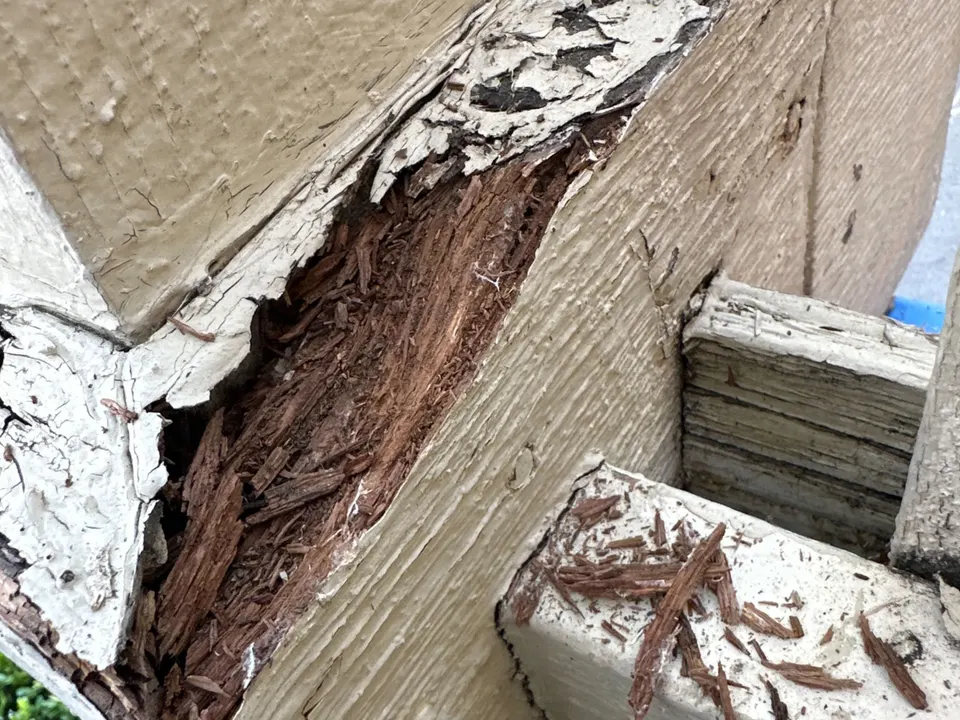
Painted wood had deteriorated at a porch railing connection.
What we did
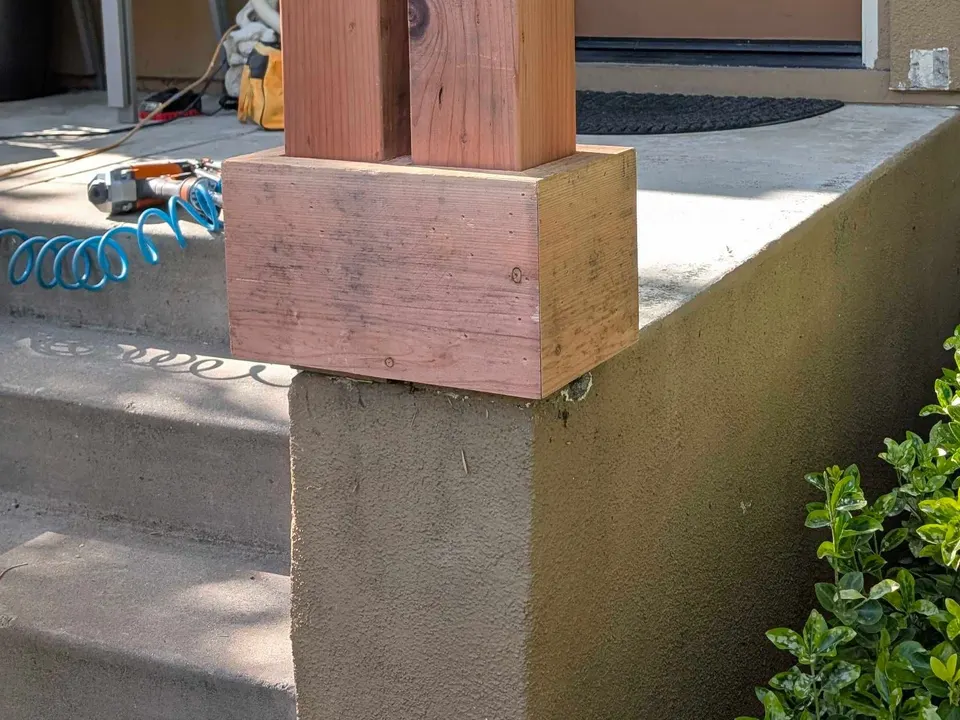
The affected post and adjoining railing detail were rebuilt and prepared for finish.
Result
The completed railing has a continuous painted finish across posts and balusters.
Deteriorated painted wood at a porch railing connection
Before: deterioration at the railing connection.
Unfinished replacement porch post beside the steps during work
In progress: unfinished replacement post.
12-second finish walkthrough along the painted railing, balusters and posts. Cropped for privacy, with original sound removed.

Deck dry rot · scope before repair

Repair the damaged part—or reconsider the deck?

Soft deck boards, deteriorated wood around posts, and loose railing connections deserve a closer look. Steady Craftsman can review a deck dry-rot repair request; the repair method, qualified trades and accepted scope must be confirmed after assessment. A photograph cannot establish that framing is sound.

When a localized repair may fit

A limited board, trim or railing repair may be appropriate when the surrounding assembly and connections can be assessed as suitable for the proposed work. Replacing visible damaged wood alone is not evidence that concealed decay has been addressed.

When replacement needs discussion

Widespread deterioration, repeated patch failures, or concerns at joists, beams, posts, footings or the ledger can change the project substantially. Load-bearing work, changes to guards or stairs, and permit requirements need review by the appropriate qualified professional and local authority before work is agreed.

What changes the scope and cost?

  • The extent and depth of damage, including concealed conditions.
  • Access, deck height, demolition and debris removal.
  • Board species or product, railing parts and finish matching.
  • Framing and connection work, design needs and permits.
  • Separate work needed to address the moisture source.

No price is inferred from photos. Ask for a written scope distinguishing confirmed work, exclusions and how newly exposed damage will be handled.

Keep off a suspect deck. Do not bounce, probe, dismantle or lean on a loose rail to test it. Take overview and detail photos only from a safe location. Note recurring wet spots or known leaks; roofing, flashing, drainage, plumbing, pest or other specialist work may be separate from carpentry. Paint or sealant is not a substitute for resolving decay and its cause.

Confirm the address and scope first.

Check the property address, repair scope and current scheduling with the Farmington Hills territory before planning a visit. The project examples have no city named.

Call (248) 309-8533