
Bathroom floor
Soft bathroom floor near a toilet: what a subfloor assessment checks
Understand what softness near a toilet can mean, what remains hidden, and how a bathroom floor repair scope is assessed.
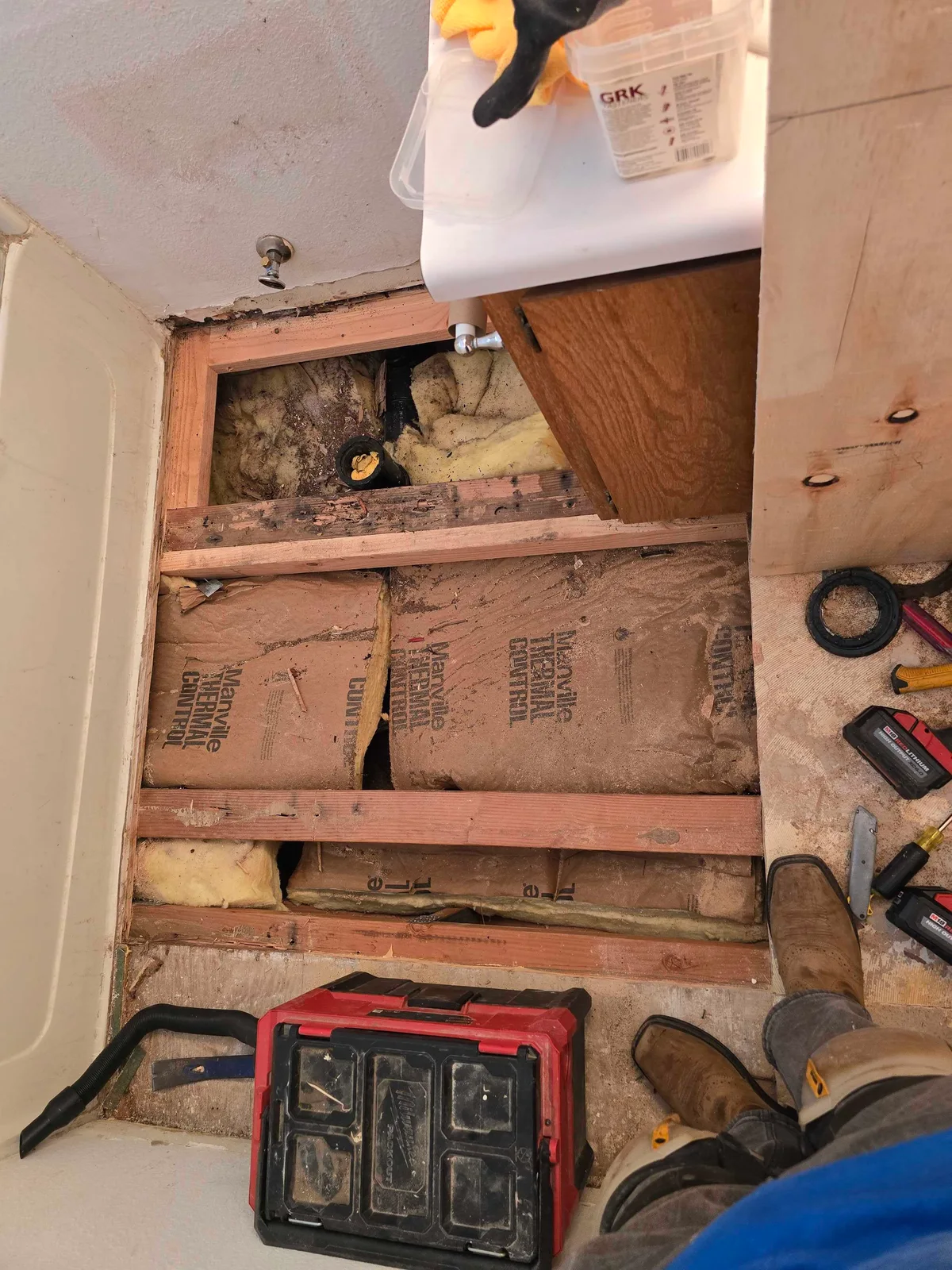
A floor that gives slightly beside a toilet is easy to dismiss as a loose finish. It is also a useful warning sign: the floor covering, underlayment, subfloor and framing are different layers, and a photograph of the top cannot show which one has changed. Treat new movement, a soft spot or a persistent wet mark as a reason to limit use of the affected area and arrange a closer look. If the surface feels unsafe underfoot, keep people off it.
Start with the condition, not a diagnosis
Describe exactly where the softness is: next to the toilet base, at the doorway, along the tub or across a wider patch. Note whether the floor moves under ordinary walking, whether grout or a finish joint has opened, and whether you see staining or dampness. Avoid pressing hard on a weak spot or lifting the toilet yourself to investigate. A damp surface may come from more than one source; the visible location does not prove a flange leak, supply leak, shower leak or past spill.
Moisture matters because it can support wood decay and indoor mold growth. EPA's homeowner guidance says moisture control is central to preventing mold and that the water problem should be fixed when mold is present. Neither source lets a homeowner determine concealed damage from a soft spot alone. If there is active water, address the leak promptly with the appropriate trade and avoid assuming a new floor finish solves it.
What an assessment checks
A scope review starts with the visible floor and plumbing fixtures, asks about water history, and considers safe access from above or below. The assessor needs to determine whether the finish can remain, whether damaged subfloor has to be exposed, and where sound material begins. An opening may be necessary before the true boundary is known. If joists or other framing appear affected, the scope should say what needs specialist review; a blog post and a surface photograph cannot certify structural safety.
Plumbing is a separate scope question. Even where damaged wood is replaced, someone must establish whether the source of wetting has been resolved. Ask which work is included in the wood-repair quote, which work belongs to a plumber or another specialist, and what happens if the opening reveals a larger affected area. That makes a change in scope understandable before the finish is put back.
What our project sequence actually shows
The documented bathroom-floor photo story begins with damaged subfloor around a toilet opening. The next images show the floor opened and framing visible, then new plywood fitted around the opening; supplied video shows the finished bathroom floor. This is company-shared project proof, not an attributed Bay Area job, a customer review or evidence of which trade fixed any water source. It illustrates why the opened stage matters: what looks like one soft patch at the surface can require a carefully defined boundary below.
If you request an assessment, send a safe wide view, the nearest detail you can photograph without stepping on the weak area, and a short note about when the movement or moisture appeared. Include any known history of repeated wetting, without guessing at the cause. A team can then discuss access and the next inspection step. See Home Finish Repair to learn how affected floor and finish work is scoped. Plumbing and other specialist work remain separate scope questions.