
Fresno service guide · 03
Fence & gate repair in Fresno
Understand what moves—and who can authorize it.
Fresno-area heat and ultraviolet exposure can crack paint and dry out sealant on fascia, trim, patio covers, pergolas and fence boards. Those surface failures become entry points when winter rain or tule fog arrives. For Fence & Gate Repair in Fresno, We look at softened posts, split rails, sagging gates, failed fasteners and boards repeatedly wetted by sprinklers or soil contact. The repair follows Find → Open → Rebuild → Protect: identify the water and movement path, expose sound attachment points, rebuild the failed section and protect cut ends and joints.
Call (650) 336-2322Talk to Henry Sr about fence & gate repair in Fresno.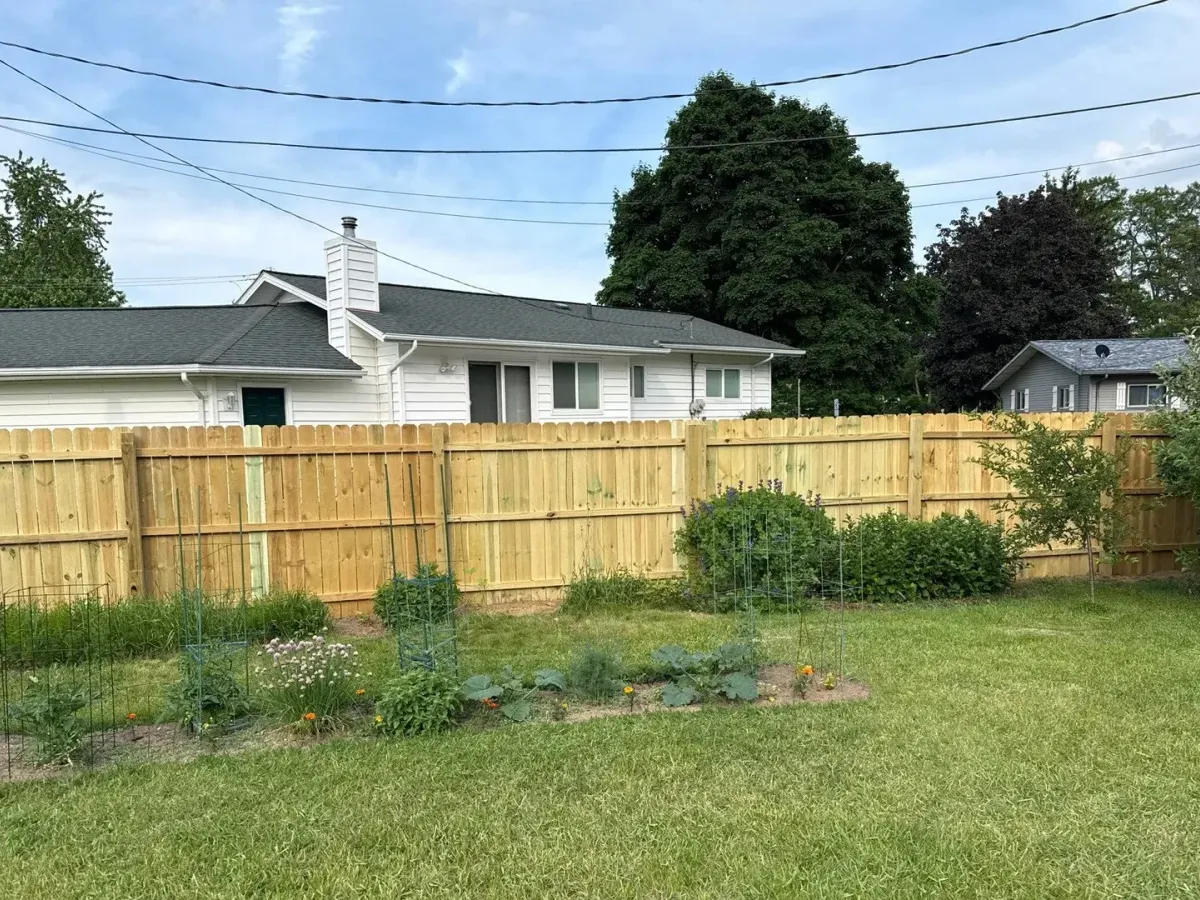
When to take a closer look
Visible signs worth
a closer look.
You don’t have to diagnose the whole repair. Start with the signs you can see.
- 01A gate drags, sags or fails to latch
- 02A post or panel moves instead of staying firm
- 03Boards split or deteriorate around connections
What a scope review can cover
- Identify affected boards, posts and hardware
- Review the condition of neighboring components
- Clarify shared ownership and access permissions
- Compare targeted repair and replacement questions
Photos & details to prepare
Write down approximate dimensions, shared ownership and access from both sides. Keep boundary verification on the checklist rather than assuming a nearby project or city qualifies.
A note on safety & scope
Confirm property lines, ownership, access and applicable requirements before any agreement. Do not dig for posts or assume utility locations.
Sourced technical guidance
Fresno fences and gates: evaluate sun-exposed boards and wet post bases separately
A weathered upper fence and a deteriorated lower support can coexist, but they do not call for the same repair. Gate alignment also depends on its frame, hinges and ground support, not just the visible pickets. This educational topic belongs to Fresno's authorized six-city owner-confirmed operational core. It makes no whole-county or travel-time promise and remains educational and unable to send a real request.
Technical synthesis source set: Nws Fresno · Usda Finishing · Usda Biodeterioration · Nps Moisture · Awc Decks
Symptoms and observation
- From a safe distance, record open board checks, detached rails, a visibly leaning post and an existing latch mismatch. Differentiate finish fading on the exposed face from loss of material around a lower connection, without using a tool to test the wood.
- Note whether sprinkler spray, soil or planting is visibly in contact with the fence base. Do not assume that a hot summer means all components are dry. Conversely, a split in a dry upper board is not enough to diagnose fungal decay.
- Describe whether a gate leaf has distorted, a hinge has visibly separated or the supporting post appears displaced. Buried post condition, footing support and fastener holding strength remain unknown from surface photographs.
Synthesis references: Nws Fresno · Usda Finishing · Usda Biodeterioration · Nps Moisture · Awc Decks
When structure changes the scope
- Gate support must be evaluated from leaf through hinges and post to the ground. Moving a latch or replacing a hinge cannot correct a decayed post base or inadequate support. A larger or heavier replacement leaf may also change demands on an existing system.
- A leaning fence run can expose neighboring panels to failure because they share rails and posts. Keep people away while a professional determines the affected extent. Do not conclude that all movement is heat-related or assign one soil behavior to the entire proposed area.
Synthesis references: Nws Fresno · Usda Finishing · Usda Biodeterioration · Nps Moisture · Awc Decks
Materials and repair decisions
- For sound structural elements with localized board damage, selective replacement and a compatible protective finish may be appropriate. Failed posts or connections require a support repair rather than additional decorative boards. The retained material should be identified explicitly in the scope.
- Choose wood for its real exposure, including ground contact where relevant, and specify treatment of field cuts according to the product. Drainage and avoidance of persistent soil or irrigation contact remain important even with treated wood or naturally durable heartwood.
- Use hardware suitable for the leaf, mating parts and timber treatment. Address alignment through the verified frame and post geometry rather than repeatedly trimming the bottom of a gate that continues to move. Boundary location, local rules and utilities need review before intrusive post work.
Synthesis references: Nws Fresno · Usda Finishing · Usda Biodeterioration · Nps Moisture · Awc Decks
What drives an estimate
- Replacing exposed boards, rebuilding a gate frame and removing a post footing are different scopes. Ask what is retained, what support is assessed and what surrounding paving or landscaping must be reinstated.
- Gate weight, hinge specification, access and matching adjoining sections affect labor and materials. A standard panel price cannot capture the cause of a failed opening or a compromised line of supports.
- Pool-barrier, retaining-wall or automated-gate functions may introduce separate design and specialist requirements. No generalized Fresno price or repair interval is justified by climate context alone.
Synthesis references: Nws Fresno · Usda Finishing · Usda Biodeterioration · Nps Moisture · Awc Decks
Timing and exposure
- The NWS Fresno overview supports hot dry summers and a cooler wet season as broad historical context. Use those contrasts to observe finish condition and alignment, while checking any year-round water source independently.
- Finish preparation and application should avoid unsuitable hot-surface conditions and require a suitably dry substrate. After winds or wet weather, inspect visually from outside the fall path; instability is not a reason to operate the gate repeatedly to see if it settles.
Synthesis references: Nws Fresno · Usda Finishing · Usda Biodeterioration · Nps Moisture · Awc Decks
Technical planning questions
Does a cracked fence board mean the fence is rotten?
No. Moisture changes and weathering can produce checks, while decay is a biological process requiring suitable moisture. The crack's location, remaining material and structural function need assessment. Do not probe it or assume either safety or failure from appearance alone.
Why replace a post if most pickets still look good?
The post carries the panels or gate into the ground, so its condition can control the whole assembly. Sound-looking infill does not restore a damaged support. A professional may be able to retain some boards while repairing the actual support problem.
Can irrigation changes replace a fence repair?
They may help correct a verified moisture source, but drying does not restore wood already weakened by decay. Source correction and assessment of remaining support are separate steps. A persistently leaning or detached section still needs a repair decision.
Is the review edge the rest of Fresno County?
No. The authorized edge is only Madera, Kingsburg, Reedley, Parlier, Dinuba and Orange Cove for review, not a general county envelope. It is not promoted to the six-city full core and cannot determine current fence-work availability.
FAQ synthesis references: Nws Fresno · Usda Finishing · Usda Biodeterioration · Nps Moisture · Awc Decks
Sources and their limits
Source scope matters: a historic district does not describe every home, and regional exposure is not a property diagnosis. These references are links only.
Wood Handbook, Chapter 14: Biodeterioration of Wood (2021)
USDA Forest Service, Forest Products Laboratory · Preserved local evidence packet · accessed 2026-09-19
Scope: Inspected previously retrieved primary PDF and extraction in qa/seo-depth/common/pdf/common-usda-biodeterioration; printed pages 14-1 to 14-8. General wood science, not a local damage survey.
Evidence: Decay fungi require available moisture; dry rot is a misleading name for decay that may subsequently dry. Mold, chemical staining and decay are different phenomena. Early decay can reduce strength before conspicuous material loss. Heartwood durability varies, sapwood is less resistant, and repairs must address the moisture condition. Ground-contact exposure and structural consequences affect material treatment choices.
Preservation Brief 39: Holding the Line—Controlling Unwanted Moisture in Historic Buildings
National Park Service · Preserved local evidence packet · accessed 2026-09-19
Scope: Inspected primary PDF already retrieved into common/pdf/common-nps-moisture; printed pages 1-7 and maintenance passages. Historic-building guidance; mechanism-level use, not a diagnosis or current municipal code.
Evidence: Document moisture patterns and investigate sources before treatment. Roof runoff, failed gutters and flashing, irrigation, ground moisture, plumbing and condensation can wet materials; water can travel away from its entry point. Trapped moisture and indiscriminate impermeable coatings can worsen damage. Ice and freeze-thaw can physically damage materials; that mechanism is distinct from fungal decay.
Wood Handbook, Chapter 16: Finishing Wood (2021)
USDA Forest Service, Forest Products Laboratory · Direct source checked · accessed 2026-09-19
Scope: Directly downloaded primary PDF; inspected printed pages 16-1 to 16-12 and application/failure passages. General finish and moisture science; no product-specific warranty or service-life prediction.
Evidence: Sunlight degrades exposed wood surfaces and coatings; moisture changes drive swelling, shrinkage, checking and cupping. These processes are not themselves a diagnosis of rot. End grain readily absorbs water. Painting wet or degraded wood invites failure. Finishes slow moisture movement but do not replace drainage. Wood species, existing coating, surface preparation and application conditions affect finish selection and performance.
DCA 6: Prescriptive Residential Wood Deck Construction Guide, 2015 IRC basis, 2018 revision
American Wood Council · Direct source checked · accessed 2026-09-19
Scope: Official primary technical guide downloaded via awc.org redirect. Inspected limitations, corrosion, footing, ledger and guard sections. Illustrates structural principles; NOT represented as the code adopted by any of the seven jurisdictions in 2026. Fence applications are explicitly general connection reasoning, not DCA 6 fence design.
Evidence: Deck safety depends on verified supporting members, footing conditions, ledger attachment, lateral connections, guards and stairs, not just deck boards. Fastener/connector corrosion resistance and compatibility with treated wood matter; salt-water exposure warrants special attention. Local authority determines applicable footing/frost requirements. Unsupported house attachments and concentrated loads require a suitable design beyond simplistic surface repair.
NOAA Technical Memorandum NWS WR-280: The Climate of Fresno, California (February 2008)
NOAA National Weather Service, Hanford / Western Region · Direct source checked · accessed 2026-09-19
Scope: Primary historical memorandum, directly downloaded; climate overview on printed pages 5-6, PDF pages 9-10. Qualitative Fresno seasonal context only, not present-day normals for each proposed municipality or a workday forecast.
Evidence: Fresno's overview describes hot, sunny, dry summers, a cooler-season precipitation regime and cool-season tule fog. It distinguishes mountain influences on the valley climate. Guides omit the memorandum's old numerical normals and do not extrapolate a house's moisture exposure from the regional description.
City-specific repair decisions
Use these city guides to review local housing context, moisture paths and the service topics available for the property.
- Fresno front fences: repair without closing off the porch · Fresno city guide
- Clovis maintenance starts with the kind of home — city guide only; no qualified detail pairing for this topic
- Sanger: a maintenance brief beyond the oldest block — city guide only; no qualified detail pairing for this topic
- Selma: identify the material behind the architectural look — city guide only; no qualified detail pairing for this topic
- Kerman: newer city growth does not replace a maintenance history — city guide only; no qualified detail pairing for this topic
What affects this repair’s cost?
- Number and condition of affected components
- Gate size, hardware and material matching
- Access, removal, utilities and property-boundary review
A real estimate follows an on-site scope review; call to arrange one. No prices or turnaround guarantees are published here.
From a question to an agreed scope.
- Describe the visible issue, approximate dimensions, and safe access.
- Confirm the address, trade requirements, and craftsman availability; review permits or specialist needs.
- Assess the affected area and discuss repair options, including what may remain unknown.
- Agree on materials, written scope, and scheduling before work starts.
Cities we serve around Fresno.
Dry-rot and wood repair across Fresno, Clovis, Sanger, Fowler, Selma, Kerman. Also by property review: Madera, Kingsburg, Reedley, Parlier, Dinuba, Orange Cove.
Confirmed-full jurisdictions
Official city/township identities; confirmed coverage policy, not operating acceptance.
Have the property address, safe photos and the visible condition ready for the assessment.
A useful starting point
Your repair
questions.
What should I show you before a fence & gate repair assessment?
Write down approximate dimensions, shared ownership and access from both sides. Keep boundary verification on the checklist rather than assuming a nearby project or city qualifies.
How is the repair scope decided?
We trace the visible condition and water path, open the affected area as needed, and identify what can be repaired versus replaced before the scope is agreed.
Ready to look at your Fresno repair?
Talk it through with Henry Sr. Describe what you are seeing, where the property is and when it started; the scope is confirmed on site, not from a photo.